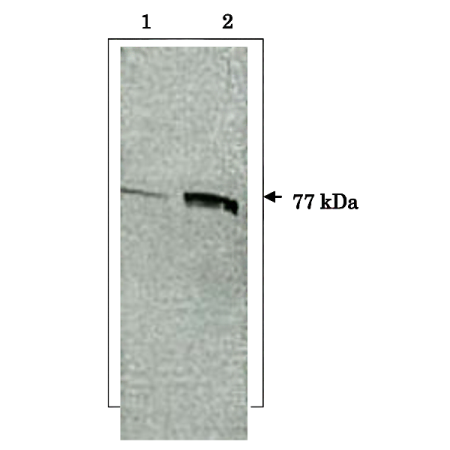
Anti-Rnq1 (S. cerevisiae) antibody, affinity purified
Product#: FNK-62-301
$421.11
Availability:
Ships in 1-2 Weeks
Anti-Rnq1 (S. cerevisiae) antibody, affinity purified
General information
| Cat. No. | :FNK-62-301 |
| Size | :100 ul |
| Antigen Species | :Yeast |
| Host Species | :Rabbit |
| Purification | :Affinity Purified |
| Label | :Unlabeled |
| Reactivity | :S. cerevisiae Rnq1, not tested with other species |
| Immunogen | :Synthetic peptide CSQQNNNGNQNRY corresponding to the C-terminus region of Rnq1 |
| Purification | :Rabbit polyclonal antibody affinity purified with the synthetic peptide used as antigen |
| Application | :Western blotting (x 300 fold dilution). Not tested for other applications. |
| Storage | : -20℃ (for long period, -70℃) |
| Form | : Purified IgG in PBS, 1mg/ml BSA, 0.09% sodium azide, 50% glycerol |
| Data Link | :SGD RNQ1/YCL028W |
Description
The glutamine- and asparagine-rich protein, Rnq1, is a putative yeast prion. Rnq1 protein with yet unknown function, can exists in either noninfectious soluble monomer form, [pin-], or the insoluble aggregated amyloid-like form called [PIN+]. The insoluble state is dominant and transmitted between cells through the cytoplasm (1). Rnq1 protein is necessary for the de novo induction of another prion, [PSI+] (2). The molecular chaperone Hsp104 is necessary for the aggregate formation of polyglutamine and for the maintenance of prion phenotype. The pre-existing aggregates are required for the chaperon-dependent establishment of the epigenetic trait in yeast prions (3).
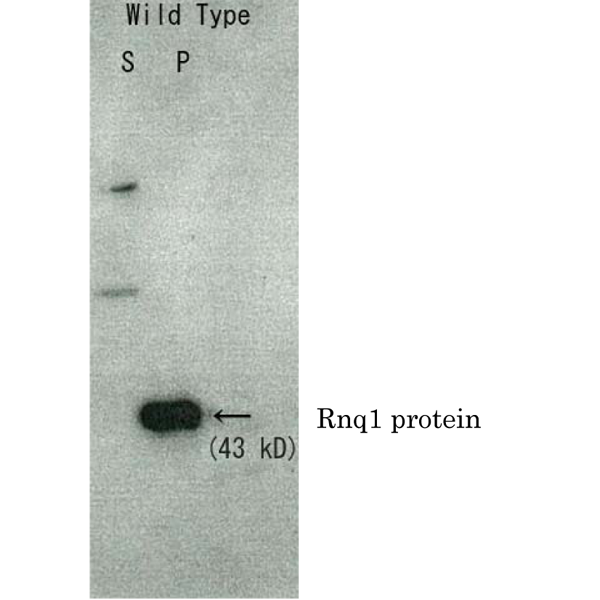 |
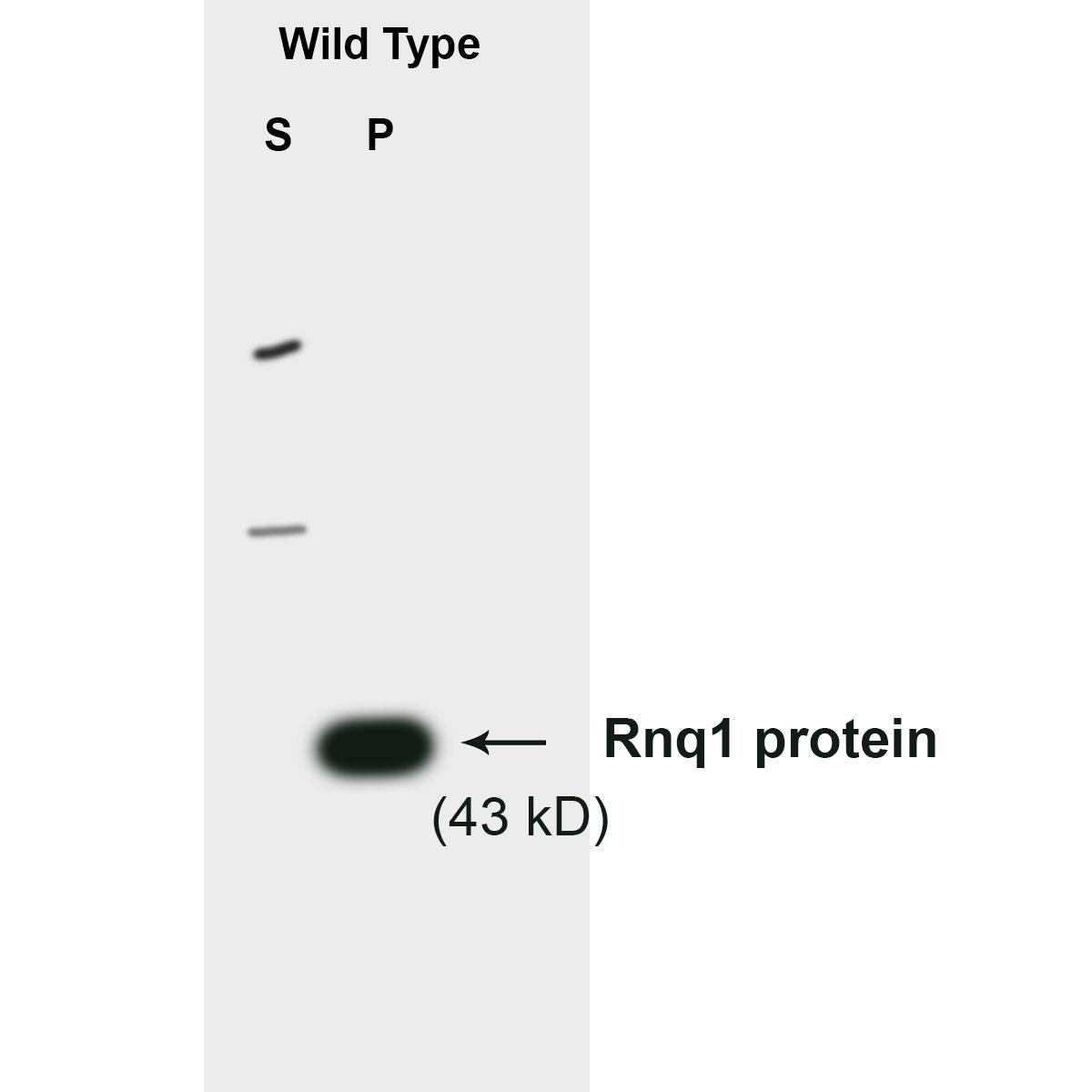
Fig.1 Detection of Rnq1 protein in S. cerevisiae by Western blotting with this antibody. PMID: 15298677 Cells were harvested after 24 h of galactose induction. Extracts were centrifuged and soluble (S) and pelleted (P) fractions were assayed by Western blotting using this antibody. Rnq1 protein was detected in pelleted fraction (ref. 3). |
References
This antibody is used in ref.3.
- Sondheimer N & Lindquist S “Rnq1: an epigenetic modifier of protein function in yeast” Mol Cell 5: 163-172 (2000) PMID: 10678178
- Derkatch IL et al “Effects of Q/N-rich, polyQ, and non-polyQ amyloids on the de novo formation of the [PSI+] prion in yeast and aggregation of Sup35 in vitro” Proc Natl Acad Sci USA 101: 12934-12939 (2004) PMID: 15326312
- KimuraY et al “The role of pre-existing aggregates in Hsp104- dependent polyglutamine aggregate formation and epigenetic change of yeast prions” Genes to Cells 9: 685-696 (2004)